Learner’s Licence: How to Apply Online in India
A learner's licence is the first step to driving legally in India. Here is how to apply online through Sarathi, what documents you need and how the test works.

To get a learner's licence, open the official Sarathi Parivahan portal, select your state, choose Apply for Learner Licence, fill the form (Aadhaar e-KYC where offered), upload documents, pay the fee and take the test on traffic rules and road signs, either online or at the RTO depending on your state.
Key Takeaways
- Apply only at sarathi.parivahan.gov.in; it is the single official portal.
- Aadhaar e-KYC, where offered, can pre-fill your details and may enable a home-based test.
- The learner's test is a multiple-choice quiz on traffic rules and road signs.
- Keep the acknowledgement or QR slip; print it if you must visit the RTO.
- Pass marks, fees and test formats vary by state, so check your state's rules before applying.
To apply for a learner’s licence online in India, go to the official Sarathi Parivahan portal (sarathi.parivahan.gov.in), select your state, choose “Apply for Learner Licence”, complete the form, upload your documents, pay the fee and take the test on traffic rules and road signs. Depending on your state, the test may be an Aadhaar-authenticated online test you take from home, or one you take at the RTO. The learner’s licence is the first legal step before you can apply for a permanent driving licence.
Think of the learner’s licence (often called the LL or LLR) as your learning permit. It confirms that you know the basic rules of the road and allows you to practise driving a specific class of vehicle, usually under the supervision of someone who already holds a full licence. It is valid for a limited period, commonly six months, during which you are expected to practise and then apply for the permanent licence. Because the whole first stage is online, most people in Karnataka and across India can complete it from home in well under an hour once their documents are ready.
Who can apply and when
A learner’s licence is tied to a vehicle class, and the minimum age depends on what you want to drive. The rules are set nationally but a few details vary by state, so treat the figures below as a general guide and confirm them on the portal.
| Vehicle class | Minimum age | Key condition |
|---|---|---|
| Gearless two-wheeler (up to 50cc) | 16 years | Guardian consent for minors |
| Two-wheeler with gear / car (LMV) | 18 years | Valid age and address proof |
| Transport / commercial vehicle | 20 years (varies) | Medical certificate required |
You apply in the state where you live, using a valid local address proof. You can apply directly yourself or through a recognised driving school, which many first-timers find convenient because the school can also provide practice lessons.
Documents to keep ready
Scanning your documents before you start avoids the form timing out or rejecting an upload. You will usually need:
- Proof of age, such as a birth certificate, PAN card, passport or Class 10 certificate.
- Proof of address, such as Aadhaar, passport, voter ID or a recent utility bill.
- A recent passport-size photograph and a clear image of your signature.
- A medical certificate in the prescribed form if your state requires it, for example for older applicants or commercial vehicle classes.
- Your Aadhaar number if your state offers Aadhaar e-KYC, plus the mobile number linked to it for OTPs.
Check the on-screen size and format limits for each upload; photographs and signatures in particular are often rejected for being too large or poorly cropped.
Step-by-step: applying on Sarathi
The learner’s licence process runs through the national Sarathi portal, but the exact screens differ by state. Type the address yourself and confirm it before entering personal details, since fraudulent copy-cat websites exist.
- Open the official portal. Go to sarathi.parivahan.gov.in. You can also reach it from parivahan.gov.in via the Drivers / Learners Licence path.
- Select your state. Pick your state from the dropdown so the correct RTO jurisdiction and workflow load.
- Choose “Apply for Learner Licence”. Start a new application and follow the on-screen instructions step by step.
- Complete Aadhaar e-KYC if offered. Where available, authenticating with Aadhaar and an OTP pre-fills your details and, in some states, enables the home-based online test.
- Fill in the form. Enter or confirm your personal details and select the vehicle class or classes you want.
- Upload documents. Add your age proof, address proof, photo and signature within the size limits shown.
- Pay the fee. Pay online through the portal’s gateway and save the receipt. Some states also allow offline payment at a designated bank branch.
- Book the test or slot. Depending on your state, either schedule a home-based online test or book an appointment at the RTO for the test and biometrics.
The learner’s test: what to expect
The test is a multiple-choice quiz on traffic rules, road signs and safe-driving basics. It is designed to confirm you understand the rules of the road before you start practising on real streets, so it focuses on practical knowledge rather than trick questions.
Formats and pass marks are not identical across states. Some states run an AI-proctored online test you can take from home after Aadhaar authentication, which means your camera stays on to confirm it is really you; others require you to appear at an RTO test terminal. Study the official booklet of road signs and traffic rules beforehand, and make use of the free mock tests many state transport sites provide. If you do not pass, states generally let you retake the test, sometimes after a short wait or a small re-test fee shown on the portal, so a first-attempt failure is not the end of the road.
Reading road signs: a quick primer
Most learner’s test questions revolve around three families of road signs, and recognising them makes the quiz much easier. Mandatory signs, usually circular, tell you what you must or must not do, such as stop or no entry. Cautionary signs, usually triangular, warn you of something ahead, such as a sharp bend or a school zone. Informatory signs, usually rectangular, give you useful information, such as a hospital or a parking area nearby. Spending even half an hour learning the shapes and colours will help you answer confidently.
After you pass
Once you pass, the learner’s licence is issued, often as a downloadable document you can print at home. Keep it safe, because you normally must hold it for a minimum period (commonly 30 days) and apply for the permanent licence within its validity window, usually six months. During this period you may drive the relevant vehicle only under the supervision of someone holding a valid permanent licence for that class, the vehicle should display an “L” mark where required, and a two-wheeler learner typically may not carry a pillion rider. Check the exact conditions printed on your own licence.
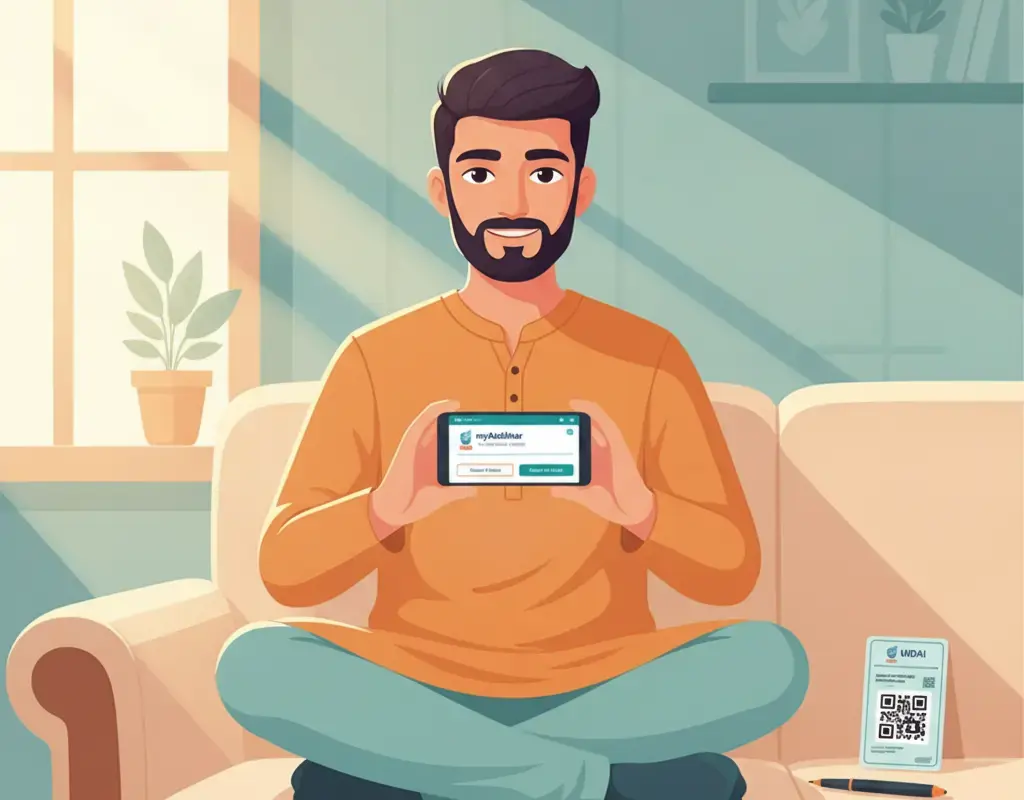
If you must visit the RTO for biometrics or the test, print the acknowledgement or QR-code slip the portal generates and carry it along with your original documents for verification.
Moving on to the permanent licence
The learner’s licence is only a stepping stone, so plan your next move while it is valid. After holding it for the minimum period, usually 30 days, you become eligible to apply for the permanent driving licence, and you should do so before the learner’s licence expires, typically within six months of issue. Use the waiting period to practise regularly under supervision so you are confident for the practical driving test at the RTO. If you let the learner’s licence lapse without applying, you may have to start the process again, including the written test, which wastes both time and the fee. Many applicants book their permanent-licence slot a few days before the 30 days are up so that there is no gap and the practical test is done well within the validity window.
Watch out for scams and fake agents
Because the learner’s licence is the entry point to driving, it attracts touts and fraud. Be wary of anyone promising a licence “without any test”, guaranteeing a pass for a fee, or asking you to pay into a personal UPI or bank account. The official process is inexpensive and you can complete it yourself, so there is no need to pay a premium to anyone.
Keep these safety rules in mind. Use only sarathi.parivahan.gov.in; bookmark it and type it manually rather than clicking links in SMS or social posts. Never share your OTP, Aadhaar OTP or portal password with anyone, including people claiming to be from the RTO or a “helpdesk”. Ignore SMS or calls saying your application is “on hold” unless you pay, as these are phishing attempts. When in doubt, go to your RTO in person rather than trusting an intermediary who approached you first.
Quick recap
A learner’s licence is quick to get and fully do-it-yourself: pick your state on the official Sarathi portal, fill the form (using Aadhaar e-KYC where offered), upload your documents, pay the fee and clear the test on road signs and rules. Confirm the fee, pass mark and test format for your own state before you start, learn the main road signs, hold the licence for the required period, and never let an agent talk you past the official process.
Sources
Arjun Rao
Arjun Rao is the founder and Editor-in-Chief of Cyber Kannadigas. A Bengaluru-based journalist and digital-rights advocate, he has spent over a decade writing about technology, governance, and consumer protection for Indian readers. He started Cyber Kannadigas after watching family members and neighbours… Read full profile →
Frequently Asked Questions
Stay scam-safe: alerts in your inbox
Get new scam alerts, UPI-safety tips, and digital-literacy guides weekly. Free.