
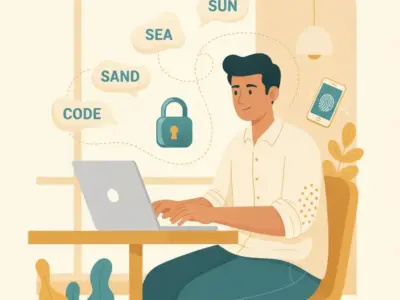
Cyber Kannadigas — Cybersecurity & Digital Literacy for Karnataka
Scam awareness, UPI safety, elder safety, and Karnataka government services — explained in plain English. Also known as CyberKannadig.
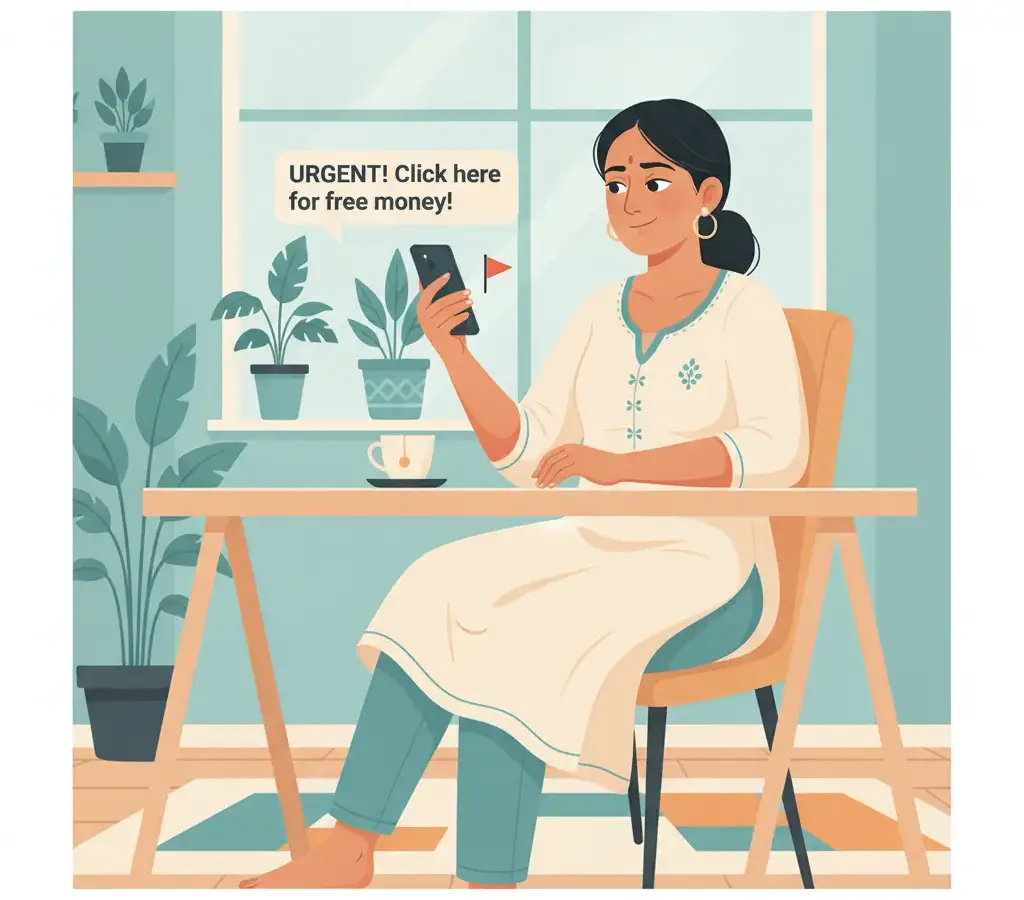
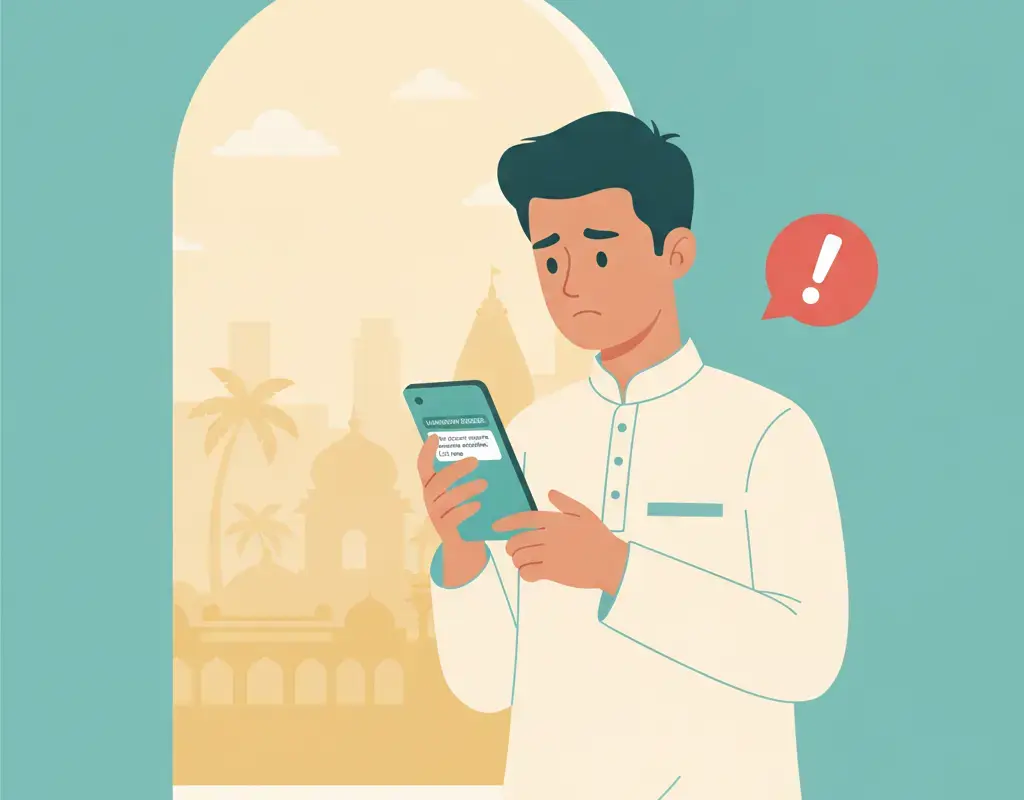
How to Spot a Phishing Email or SMS: Real Examples
Phishing messages have become disturbingly convincing, mimicking SBI, HDFC, IRCTC, and even CERT-In itself. Knowing the tell-tale patterns can stop a credential theft before it starts.
Read more →

Recent Scam Alerts
The latest fraud patterns to watch for in Karnataka
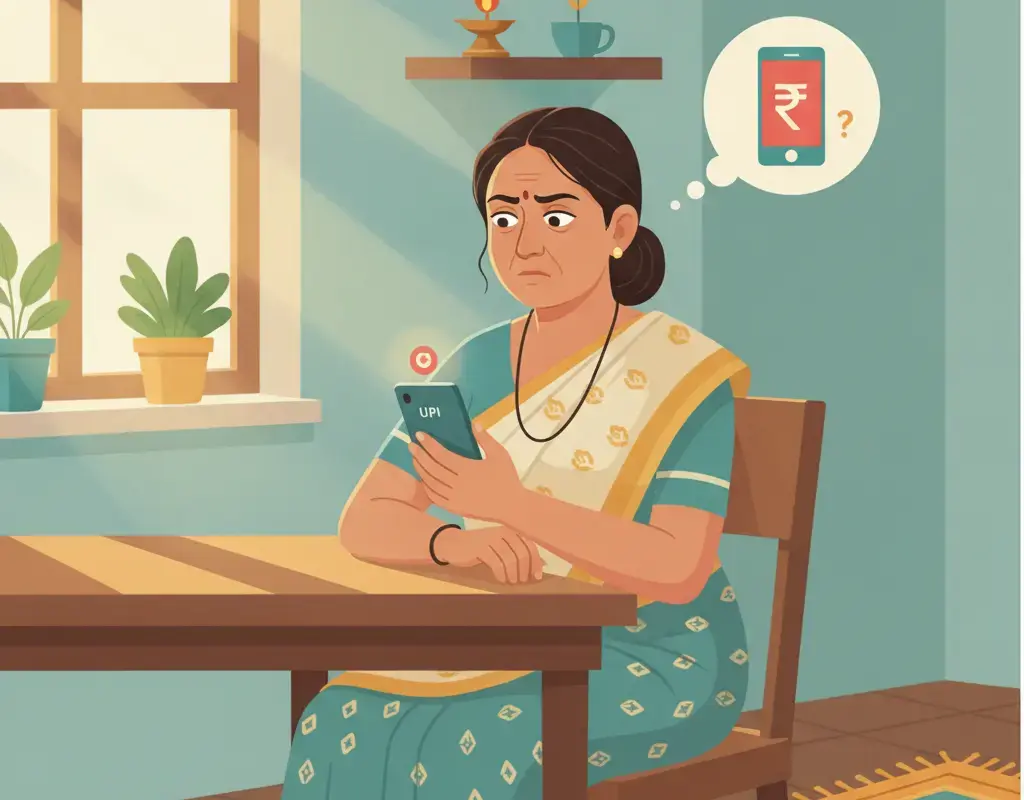
Cybersecurity
Phishing protection, passwords, 2FA, antivirus, and safe browsing — secure your digital life.
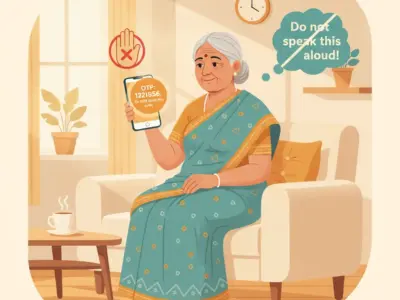
Scam Awareness
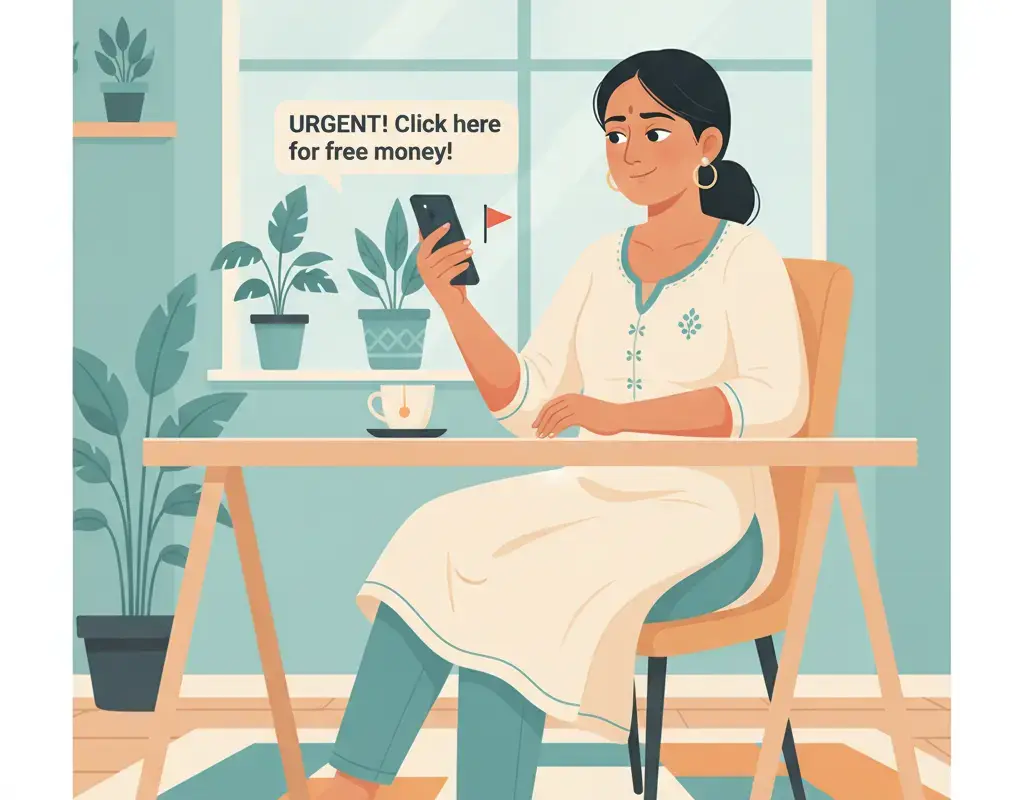
UPI fraud, KYC scams, job scams, OTP theft — Karnataka-context fraud patterns to watch for.

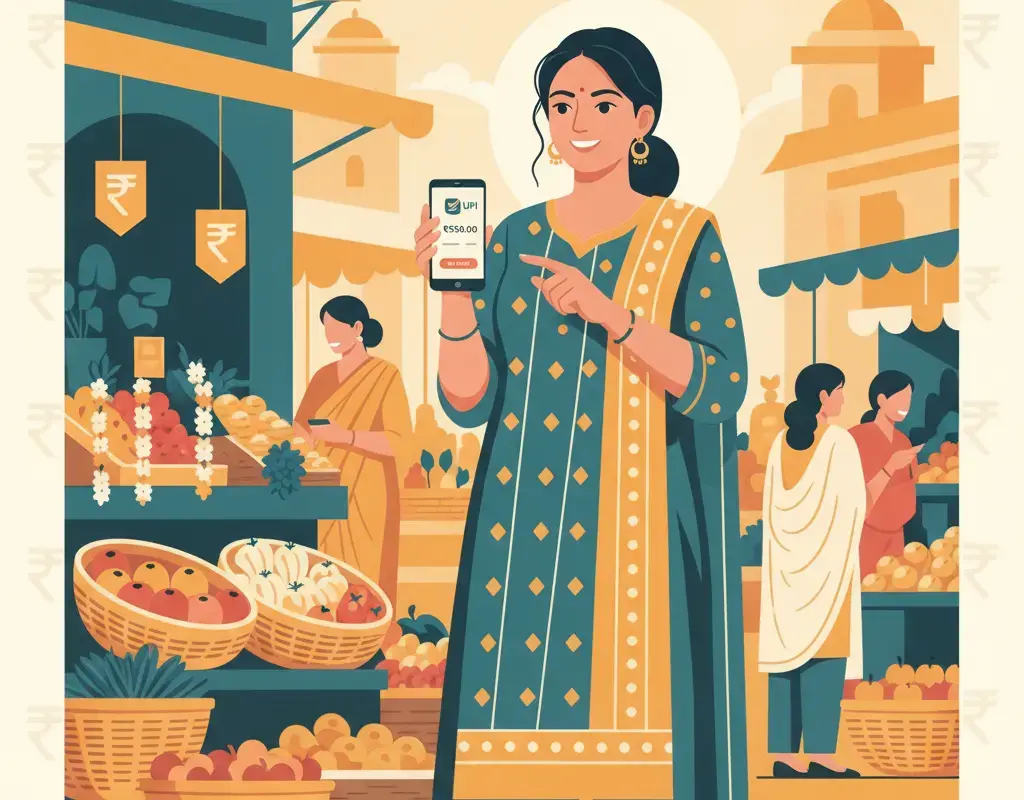
Digital Payments
UPI safety, online banking, and secure everyday transactions.


Elder Safety
Smartphone basics, scam-call recognition, and online safety for senior family members.
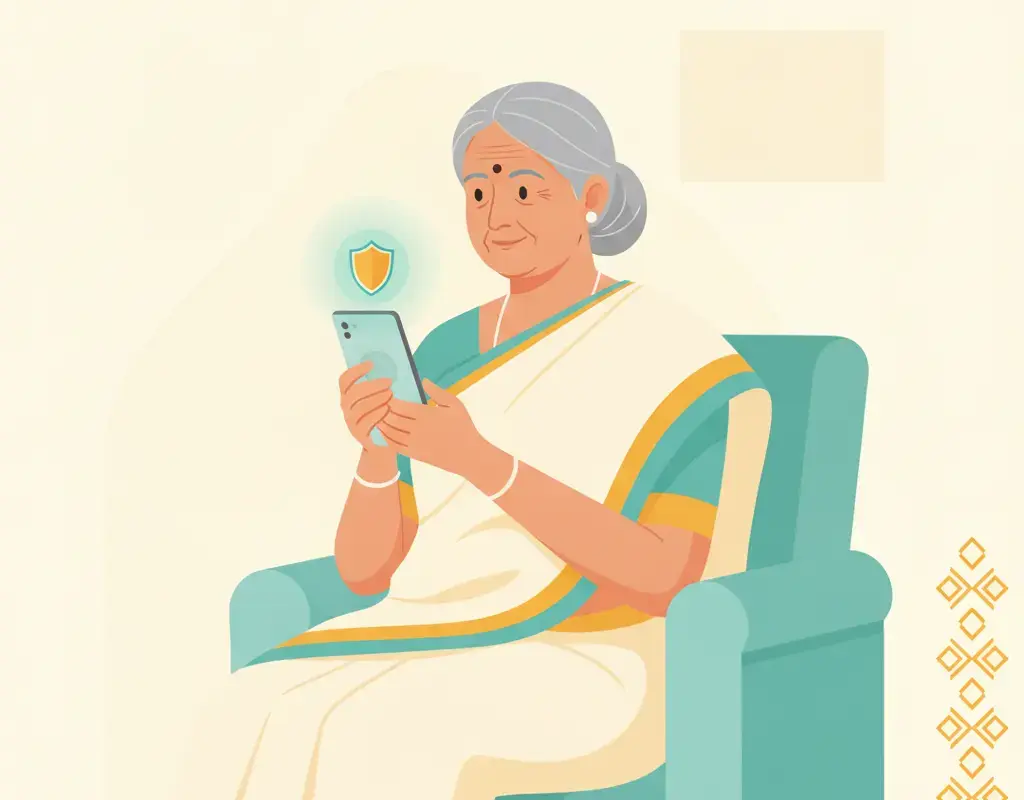
Digital Services
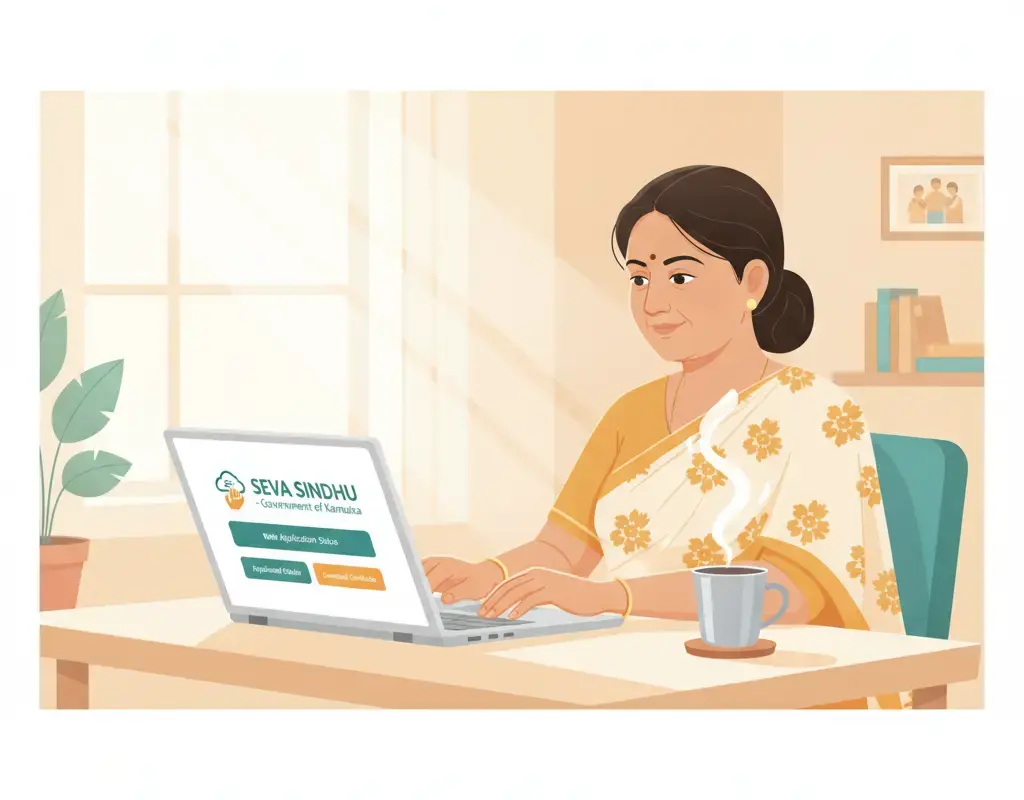
Karnataka government services explained — Seva Sindhu, Bhoomi, BBMP, Kaveri, and more.
Mobile Apps
App safety reviews, permission analysis, and trusted recommendations.


Tech Basics
Foundational digital literacy — smartphones, browsers, email, and online shopping.

Editor's Picks
Cyber Kannadigas selections worth your time

Meet the Cyber Kannadigas Editorial Team
Real, named authors — cited sources, no pseudonyms





Get safety alerts on WhatsApp and email
Whether you call us Cyber Kannadigas, CyberKannadig, or Cyberkannadiga — get scam alerts and safety tips direct from our editorial team. Free, unsubscribe anytime.
On this page
- What is Cyber Kannadigas? Your Trusted Source for Cyber Safety in Karnataka
- About Cyber Kannadigas: Mission and Vision
- Cyber Kannadigas, CyberKannadig, CyberKannadiga: All the Same Trusted Resource
- Is There a Cyber Kannadigas App, APK, or Login?
- Cybersecurity Fundamentals: Stay Safe Online
- Common Scams in Karnataka: What to Watch For
- UPI and Digital Payments Safety
- Online Safety for Karnataka Elders
- Karnataka Government Digital Services
- How Cyber Kannadigas Is Different: Our Editorial Standards
- Meet the Cyber Kannadigas Editorial Team
- Subscribe to Cyber Kannadigas: Safety in Your Inbox
- Frequently Asked Questions About Cyber Kannadigas
What is Cyber Kannadigas? Your Trusted Source for Cyber Safety in Karnataka
Cyber Kannadigas is an independent, English-language cybersecurity and digital-literacy publication built specifically for the people of Karnataka and the global Kannada diaspora. We cover the threats, tools, policies, and practical skills that affect everyday digital life in our region — from UPI fraud and mobile scams to government e-services and safe social-media use. If you have ever searched for reliable guidance on staying safe online in a Karnataka context, Cyber Kannadigas is the resource you were looking for.
Our editorial team monitors the cybercrime patterns that law enforcement and banks report in Karnataka, Bengaluru, Mysuru, Hubli-Dharwad, Mangaluru, and across the Kannada-speaking belt. We translate complex technical warnings into clear, actionable advice that works whether you are a college student in Bengaluru, a farmer in Belagavi who received a suspicious SMS, or a Kannada professional working in a data centre in Toronto.
Cyber Kannadigas covers eight distinct topic areas. Our cybersecurity category explains account hygiene, password managers, phishing attacks, and device security. The scam-awareness section tracks fraud patterns that are active right now in Karnataka. The digital-payments section focuses on UPI, NEFT, mobile-banking safety, and what to do when a transaction goes wrong. Our elder-safety section is written directly for older adults and for family members helping them navigate the web. The digital-services section is a practical guide to Karnataka government portals such as Seva Sindhu, DigiLocker, and BBMP e-services. Our mobile-apps section reviews applications that Kannadigas commonly use and flags the dangerous ones. The tech-basics section is for anyone who is new to smartphones or the internet. And the CyberKannadig editorial archive contains deep-research pieces and explainers that go beyond the news cycle.
Everything published on Cyber Kannadigas is fact-checked against official sources — cybercrime.gov.in, the Reserve Bank of India, the Ministry of Electronics and Information Technology, and verified Karnataka Police press releases. We do not accept payment to alter our coverage and we do not run affiliate links that create conflicts of interest in our safety advice. Our goal is simple: a Kannada-speaking internet user who reads Cyber Kannadigas regularly should be meaningfully safer online than one who does not.
Cyber Kannadigas is not affiliated with the Karnataka government, Karnataka Police, or any government agency. We are an independent publication. If you need to report a cybercrime, call the national helpline 1930 or file a complaint at cybercrime.gov.in.
About Cyber Kannadigas: Mission and Vision
The founding premise of Cyber Kannadigas is straightforward: Karnataka has one of India's largest concentrations of technology professionals, yet ordinary Kannadigas — outside the Bengaluru tech corridor — receive very little practical cybersecurity guidance in a language and cultural context they can use. Generic national-level advisories do not name the specific apps fraudsters are abusing to target Kannada speakers. They do not explain the particular social-engineering scripts that a scammer in Tumkur market uses. Cyber Kannadigas was created to fill that gap.
Our mission is to make every Kannadiga — regardless of age, education, or technical background — confident and safe in digital spaces. We pursue this through three commitments.
Accuracy first. Every piece of advice we publish must be verifiable against an authoritative source. We cite the RBI, CERT-In, cybercrime.gov.in, Karnataka Police, and peer-reviewed research. When official guidance changes, we update our articles and note the revision date. We would rather publish fewer articles than publish fast and wrong.
Radical clarity. Cybersecurity language is full of jargon that excludes the people who most need protection. Cyber Kannadigas writes in plain Indian English. When we must use a technical term, we define it immediately. Our editorial rule is that a retired school-teacher in Mandya should be able to read any article on this site and finish it feeling better informed, not more confused.
Community accountability. We publish the names and credentials of every editor and contributor. Our about page and our team page explain who we are and what qualifies us to advise you. If we make an error, we correct it publicly with a dated note. Cyber Kannadigas is accountable to its readers, not to advertisers or government departments.
Our long-term vision is to become the most-trusted digital-safety reference in the Kannada-speaking world — the first resource a Kannadiga opens when they receive a suspicious call, a strange link, or a request they cannot explain. We want every library in Karnataka, every school computer lab, and every family WhatsApp group to have a direct link to Cyber Kannadigas.
Cyber Kannadigas, CyberKannadig, CyberKannadiga: All the Same Trusted Resource
If you have searched for cybersecurity help in a Karnataka context, you may have come across this platform under several different spellings. They all refer to the same independent publication. This section explains every variation so you can be confident you have found the right place.
All our names
- Cyber Kannadigas — the canonical, full brand name used in our masthead, our domain cyberkannadigs.org, and in most of our content. This is the spelling to use when recommending us to others. A Kannadiga is a person of Kannada heritage; Kannadigas is the plural, reflecting the community we serve.
- CyberKannadig — the single-word form associated with our legacy domain cyberkanadig.com, which now redirects to cyberkannadigs.org. This compact form still appears in older bookmarks, saved PDF guides, and links on community forums. If you have a saved link to cyberkanadig.com, it will bring you here.
- CyberKannadiga — a variant that drops the plural 's'. Many readers write it this way intuitively; it resolves to the same site.
- Cyberkannadiga — the same variant with a lowercase 'k'. Search engines and social-media platforms treat this identically to CyberKannadiga. Both resolve here.
- Cyber Kannadiga — the two-word spaced form with a singular noun. Commonly written this way in full sentences, as in 'I read it on Cyber Kannadiga.'
- ಸೈಬರ್ ಕನ್ನಡಿಗರು — the Kannada-script form of the brand name. ಕನ್ನಡಿಗರು is the Kannada word for Kannadigas; ಸೈಬರ್ is the Kannada transliteration of 'cyber'. Kannada readers searching in their native script will find us this way.
The question we hear most often from first-time visitors is: Is CyberKannadig the same as Cyber Kannadigas? Yes, entirely. The variation exists for historical reasons. When this publication launched, the first domain registered was cyberkanadig.com. As readership grew and the editorial team expanded, the brand was formally renamed Cyber Kannadigas — reflecting the plural, community-centred identity the publication had grown into. The old domain was kept alive as a redirect so that anyone who had bookmarked it, printed it in a flyer, or shared it in a WhatsApp message would still arrive at the right place.
Similarly, CyberKannadiga and Cyberkannadiga are organic spelling variations that emerged because 'Kannadiga' (singular) is the more common word in everyday English speech about Karnataka. Readers naturally wrote what felt correct. We have embraced all these forms as part of our identity rather than trying to suppress them.
What matters more than the exact spelling is what the name stands for: accurate, honest, independent cybersecurity and digital-literacy guidance for every Kannadiga, wherever they are in the world. Whether you type Cyber Kannadigas, CyberKannadig, Cyberkannadiga, or ಸೈಬರ್ ಕನ್ನಡಿಗರು into a search engine, you should arrive here.
One practical note: because our brand name has multiple spellings in circulation, it is occasionally impersonated. If you see a site, app, or social-media handle using any of the above names that does not resolve to cyberkannadigs.org, treat it with caution. Cyber Kannadigas does not operate any paid apps, APKs, or third-party Telegram bots. Our authoritative home is this website. If something looks wrong, you can verify using our about page.
For journalists, researchers, and educators who cite us: the preferred citation form is Cyber Kannadigas (cyberkannadigs.org). Academic references may note the legacy domain cyberkanadig.com as a historical alias. Our editorial and legal identity is Cyber Kannadigas.
Is There a Cyber Kannadigas App, APK, or Login?
This is one of the most common questions we receive, and we want to answer it plainly: Cyber Kannadigas does not have an official app on the Google Play Store or the Apple App Store. There is no official APK file for download. There is no login page, no membership portal, and no subscription account to create on this website.
All of our content — every article, guide, scam alert, and safety explainer — is freely and openly accessible on this website, cyberkannadigs.org, with no registration required. You do not need to create an account to read anything here.
Why this matters: fake app warnings. Because Cyber Kannadigas has built a trusted reputation in the Karnataka cybersecurity space, fraudsters have occasionally used our brand name or variations of it (CyberKannadig, CyberKannadiga, Cyberkannadiga) to promote fake apps or APK files. These fake applications may claim to offer 'exclusive safety alerts', 'Karnataka police notifications', or 'personal cybercrime support'. They do not come from us. Installing an unofficial APK that claims to be Cyber Kannadigas is dangerous: it could install malware, steal your contacts and banking credentials, or enrol your device in a surveillance network.
If you see any app — on Google Play, on Telegram, on a third-party website, or in a WhatsApp message — that claims to be the Cyber Kannadigas app or the CyberKannadig app, do not install it. If you have already installed such an app, uninstall it immediately, run a security scan, and consider changing the passwords on your banking and social-media accounts. Report the fake app to cybercrime.gov.in or call helpline 1930.
How to get an app-like experience. You can add Cyber Kannadigas to your smartphone's home screen as a progressive web bookmark, which works like an app icon but opens directly in your browser with no APK download required. On Android: open cyberkannadigs.org in Chrome, tap the three-dot menu, and choose 'Add to Home screen'. On iPhone: open cyberkannadigs.org in Safari, tap the Share icon, and choose 'Add to Home Screen'. The resulting icon on your home screen will behave almost exactly like an app shortcut — one tap and you are on the site.
For a full explanation of this, including screenshots for Android and iOS, see our guide at /cyber-kannadigas-app/.
Newsletter instead of an app. Our email newsletter delivers new safety alerts and guides directly to your inbox. Subscribing takes thirty seconds and requires only an email address — no app, no login, no account. See the subscribe section below for details.
We will announce publicly here and on our verified social-media channels if we ever launch an official app. Until that announcement appears on cyberkannadigs.org itself, assume any app claiming to be Cyber Kannadigas is unofficial and potentially dangerous.
Cybersecurity Fundamentals: Stay Safe Online
Cybersecurity is not only a concern for IT professionals. Every Karnataka resident who owns a smartphone, uses WhatsApp, pays via UPI, or accesses a government portal is a potential target for cybercriminals. Cyber Kannadigas covers the full spectrum of digital threats and defences in our cybersecurity section.
Passwords and account access. The single most effective action most people can take to improve their digital security is to use a different, strong password for every account — and to enable two-factor authentication wherever it is offered. A strong password is at least twelve characters, mixes letters, numbers, and symbols, and does not contain your name, birthday, or city. A password manager (such as Bitwarden, which is free) stores all your passwords securely so you do not need to remember them. Cyber Kannadigas publishes step-by-step setup guides for the most popular password managers.
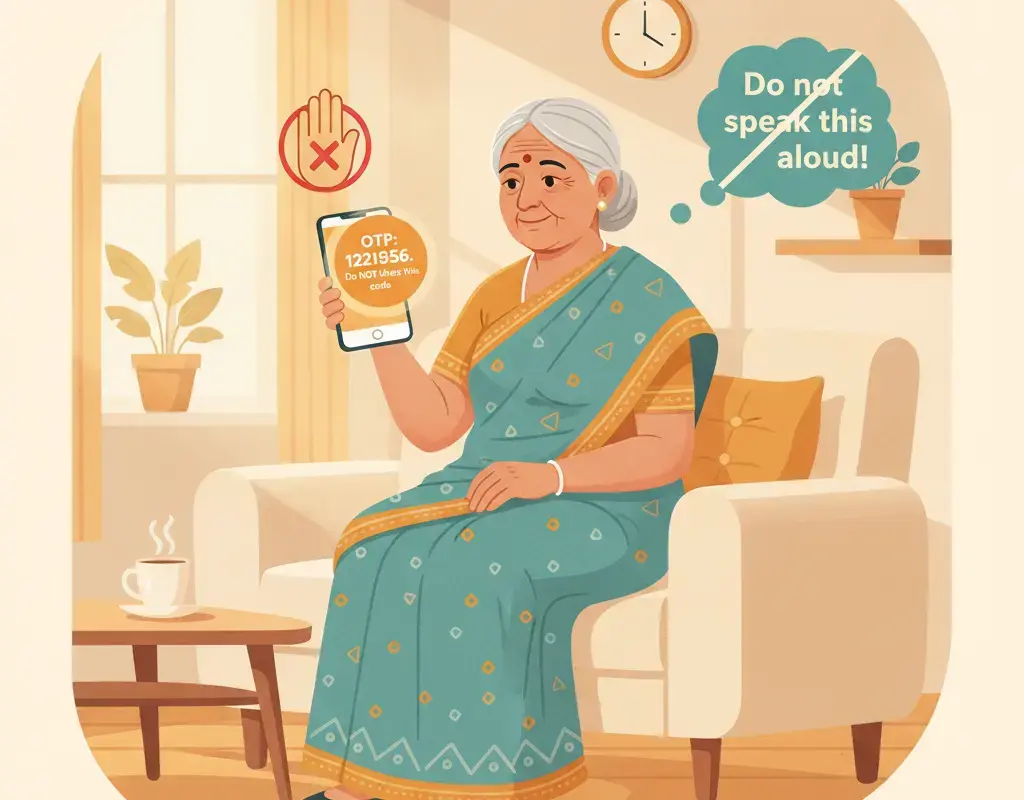
Phishing and smishing. Phishing is the practice of sending fake emails or messages that impersonate a trusted entity — your bank, UIDAI, the income tax department, Amazon — to trick you into revealing your credentials or clicking a malicious link. Smishing is the same attack via SMS. Karnataka Police have documented thousands of smishing complaints in the past two years, particularly messages claiming to be from TRAI threatening to disconnect your mobile number. The key rule: no legitimate organisation will ask for your OTP, PIN, or password over a call, SMS, or email. Ever.
Device security. Keep your phone's operating system and apps updated. Software updates close security vulnerabilities that criminals actively exploit. Avoid connecting to public Wi-Fi for banking or any activity involving sensitive data. If you must use public Wi-Fi, use a VPN. Install apps only from the Google Play Store or Apple App Store, and only from developers you can verify. Delete apps you no longer use.
Social-media safety. Adjust your privacy settings so that your phone number, date of birth, and home address are not visible to strangers. Be sceptical of friend requests from people you do not know in real life, particularly if the account was created recently or has very few posts. Romance scams and job-offer scams on Instagram and Facebook are a growing problem in Karnataka.
For detailed, up-to-date guidance on all of these topics, visit our cybersecurity category page.
Common Scams in Karnataka: What to Watch For
Karnataka is one of the most targeted states in India for online fraud. Bengaluru's large working population, the high density of UPI users, and the rapid adoption of smartphones in tier-2 and tier-3 cities have all made Kannadigas attractive targets. Cyber Kannadigas documents and analyses active scam patterns in our scam-awareness section and in our comprehensive Scam Awareness Guide.
Digital arrest scams. This is currently one of the most widespread and financially devastating scam types in India. A caller claims to be from the Narcotics Control Bureau, the CBI, TRAI, or the Supreme Court, and tells the victim that a parcel in their name has been intercepted containing drugs or that their Aadhaar card has been used for money laundering. The victim is placed on a fake 'digital arrest' — ordered to remain visible on a video call for hours or days — and pressured to transfer large sums of money to 'clear their name'. No legitimate Indian law-enforcement agency conducts arrests or settlements over video calls. If you receive such a call, hang up immediately and call 1930.
KYC update fraud. Fraudsters send SMS or WhatsApp messages claiming that your bank account or mobile SIM will be blocked unless you complete a KYC update. They direct you to a fake website or ask you to share an OTP. Your bank will never ask for your OTP via SMS or call.
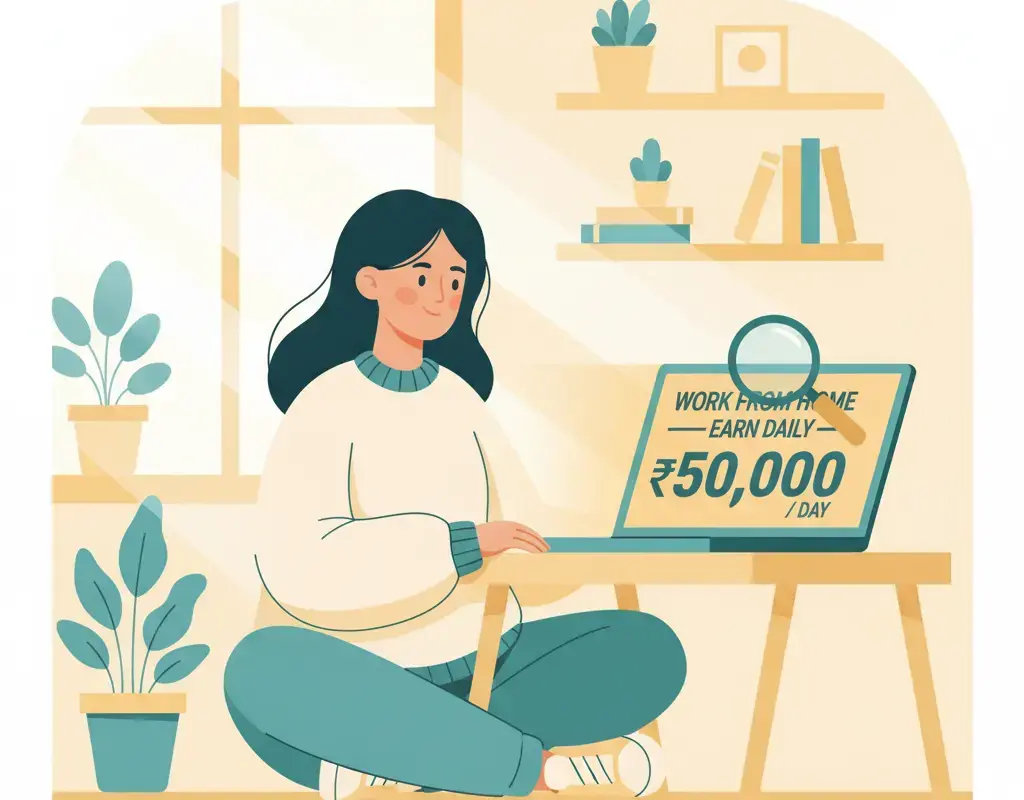
Fake job offers. Scammers advertise high-paying remote jobs — data entry, social-media rating, crypto investment — that require an upfront 'registration fee' or 'training deposit'. Once paid, the job disappears. Some victims are even recruited into overseas scam compounds.
Loan app fraud. Predatory instant-loan apps charge usurious interest and, when payments are missed, use the victim's contact list and camera to send doctored photographs to family members as blackmail. In Karnataka, several victims have suffered severe distress as a result of this harassment. Only borrow through RBI-regulated NBFCs and banks. Check the RBI's official list of authorised lenders.
Investment fraud (pig butchering). A stranger befriends you online, builds a relationship over weeks, then introduces you to a seemingly profitable crypto or stock-trading platform. Early withdrawals work to build trust; then a large 'investment' disappears along with the contact.
For the full list of active scam types and how to report them, visit our Scam Awareness Guide and the scam-awareness category.
UPI and Digital Payments Safety
Karnataka has one of the highest UPI transaction volumes in India. That adoption is a sign of genuine digital progress, but it has also made Kannadigas a prime target for payment fraud. Cyber Kannadigas covers UPI safety in depth in our digital-payments section and in our step-by-step UPI Safety Guide.
The 'collect request' trap. One of the most common UPI frauds involves a caller who claims to be sending you money — a refund, a prize, a government subsidy — and asks you to 'approve' a UPI request on your app. When you enter your PIN to approve it, you actually send them money. Remember: to receive money, you never need to enter your UPI PIN. Your PIN is only used when you are the one sending money.
Fake QR codes. Scammers replace legitimate merchant QR codes with their own, particularly in markets, petrol stations, and restaurants. Always confirm the merchant name shown on your payment app before entering your PIN.
Screen-sharing fraud. A caller claiming to be from your bank or a UPI app's customer support asks you to install a screen-sharing app (such as AnyDesk or TeamViewer) to 'help you with your account'. Once installed, they watch your screen — and your OTPs — in real time. No legitimate bank or payment app will ever ask you to install a remote-access app.
If a payment goes wrong. If you believe you have been defrauded via UPI, act within the first two hours: call your bank's 24-hour helpline, call the national cybercrime helpline 1930, and file a complaint at cybercrime.gov.in. The faster you report, the higher the probability of a freeze on the recipient account before the money is withdrawn.
For full guidance including step-by-step screenshots, visit our UPI Safety Guide and digital-payments section.
Linking bank accounts safely. When you first link a bank account to a UPI app, use only the official app of your bank or a well-known UPI provider (BHIM, Google Pay, PhonePe, Paytm). Do not link your account through a link sent by a stranger, a call centre agent, or a social-media message. Legitimate UPI apps never ask you to call a helpline number found in a Google search — the only valid customer care numbers are those printed on the back of your debit card or on your bank's official website.
Transaction limits and alerts. Enable SMS and email alerts for all transactions on your bank account. Set a daily UPI transaction limit through your bank's app — most banks allow you to lower this below the default maximum. If you notice an unauthorised transaction, report it to your bank and to 1930 within twenty-four hours; delays significantly reduce the chance of reversal. Cyber Kannadigas publishes bank-specific reporting guides in our digital-payments section.
Online Safety for Karnataka Elders
Older adults are disproportionately targeted by cybercriminals because they are perceived to be less familiar with digital systems, more trusting of authority figures, and more likely to hold retirement savings. In Karnataka, scam calls impersonating bank officials, UIDAI, and law enforcement have caused serious financial harm to senior citizens. Cyber Kannadigas devotes a dedicated section to this: our elder-safety section and our practical Elder Safety Guide.
The impersonation problem. Most elder-targeted scams work by impersonating a trusted authority. The caller may claim to be from 'your bank's fraud department', 'TRAI', 'the income tax department', or even 'Karnataka Police'. They speak confidently, use your name and partial account details (which they obtained from data brokers or data breaches), and create a sense of emergency. The emergency is artificial. When you feel pressured to act immediately on a financial matter, that pressure is itself a red flag.
Family safety conversations. Cyber Kannadigas publishes guides designed to be read together with an older family member — or printed out and left with them. Our elder-safety articles are written directly to the senior reader, without condescension, using large print-friendly formatting. We also publish guidance for adult children who want to help a parent navigate smartphones and online banking safely without taking control away from them.
The 'trusted contact' approach. Encourage older family members to designate a trusted person — a son, daughter, or neighbour — to consult before making any payment above a certain amount in response to a call or message. Simply adding a pause and a second opinion breaks the urgency loop that scammers depend on.
For detailed, elder-friendly guidance, visit our Elder Safety Guide and the elder-safety section.
Common scripts used against elders. Cyber Kannadigas has documented the exact phrases that fraudsters in Karnataka use. They open with 'Your Aadhaar has been misused'; they escalate with 'You will be arrested within two hours'; they close with 'Transfer money to this safe account and we will return it after verification.' None of this is how any real government agency operates. Sharing these scripts with older family members — in plain conversation — is one of the most effective prevention tools available.
Reporting elder-targeted fraud. If an older person in your family has been victimised, help them call 1930 and file at cybercrime.gov.in as soon as possible. Most elders feel shame after a scam and delay reporting; reassure them that cybercrime is not their fault and that reporting quickly is the most important thing they can do. Our Elder Safety Guide includes a checklist of what information to have ready before calling 1930.
Karnataka Government Digital Services
The Karnataka government has made significant investments in e-governance over the past decade. Platforms such as Seva Sindhu, DigiLocker, BBMP Online, Sakala, and the CM Helpline have moved hundreds of services online, reducing the need for in-person visits to government offices. Cyber Kannadigas covers these services in our digital-services section and in our practical Seva Sindhu Guide.
Seva Sindhu. Karnataka's unified service-delivery portal allows residents to apply for caste certificates, income certificates, residence certificates, various licences, and dozens of other documents online. Our Seva Sindhu Guide walks through the registration process, explains how to track your application, and lists the most common reasons applications are rejected so you can avoid them.
DigiLocker. DigiLocker is a central government service that stores your official documents digitally — Aadhaar, driving licence, vehicle registration, educational certificates — and makes them legally equivalent to physical copies for most purposes. Cyber Kannadigas explains how to set up DigiLocker and how to use it safely, including how to avoid fake DigiLocker apps.
Scams targeting government-service users. Fraudsters know that people seeking government services are often confused by bureaucratic processes and eager to complete them quickly. We have documented scam operators who charge fees to 'help' with Seva Sindhu applications that are actually free, and phishing sites that mimic official Karnataka government portals. Always access government services through URLs that end in .kar.nic.in, .karnataka.gov.in, or the verified app on the official Play Store. Never pay a third party to submit a form you can submit yourself for free.
For step-by-step guidance, visit our Seva Sindhu Guide and the digital-services section.
Other key Karnataka portals. Sakala is the Karnataka guarantee-of-services portal that tracks whether a department has responded to your application within the legally mandated time. The BBMP e-portal handles property tax payments, khata transfers, and trade licences for residents of the Bengaluru metropolitan area. Karnataka One centres provide assisted digital access in over two hundred locations across the state for residents who are not comfortable using portals independently. Cyber Kannadigas covers all of these in our digital-services section.
Mobile apps for Karnataka services. Several Karnataka government services have official companion apps on the Google Play Store. Always verify the publisher name before installing — official apps are published by the relevant department, not by third parties. Our mobile-apps section lists verified Karnataka government apps and flags known impostors.
How Cyber Kannadigas Is Different: Our Editorial Standards
There is no shortage of cybersecurity content online. Most of it is written for a global, technically-literate audience, loaded with affiliate links, and produced by anonymous writers with no accountability for errors. Cyber Kannadigas takes a different approach, and we want to explain exactly what that means.
Named authors. Every article on Cyber Kannadigas carries the byline of the editor or writer responsible for it. Their bio, credentials, and contact information are listed on our team page. This is not standard practice in Indian digital media. We do it because we believe readers deserve to know who is advising them on financial and personal safety matters.
Cited sources. Every factual claim in our safety guides — every statistic, every official warning, every legal requirement — is linked to its primary source. We cite the RBI circular, the CERT-In advisory, the cybercrime.gov.in notice, or the Karnataka Police press release. We do not cite other news articles as primary sources when the underlying official document is available.
No paid placement. Cyber Kannadigas does not accept payment to mention, recommend, or positively review any app, service, or product. If we recommend a tool — a password manager, a VPN, a security app — it is because our editorial team has tested and verified it, not because someone paid for the mention. We publish our full editorial and ethics policies at /editorial-policy/ and /ethics/.
Corrections. When we publish an error, we correct it with a visible, dated correction note on the article. We do not silently delete or rewrite content without disclosure. Our fact-checking policy explains our verification process in detail.
YMYL accountability. Cybersecurity and digital-payments advice is 'Your Money or Your Life' content: bad advice can cause real financial harm. We take that responsibility seriously. Our standard for publication is not 'probably true' but 'verified against an authoritative source'.
Independence from government and law enforcement. Cyber Kannadigas is not affiliated with Karnataka Police, CERT-In, or any other agency. We report on their advisories and decisions — sometimes critically. Our coverage of government cybersecurity initiatives is independent; we will report shortcomings as readily as successes. An independent cybersecurity press is a public good, and we take that responsibility seriously. Readers who want to verify our independence are welcome to read our editorial policy and ethics page in full.
Meet the Cyber Kannadigas Editorial Team
Cyber Kannadigas is produced by a small, dedicated editorial team with backgrounds in cybersecurity, investigative journalism, and community education. You can read full bios and contact details for each editor on our team page.
Priya Nair, Editor-in-Chief. Priya oversees editorial direction and is responsible for the accuracy standards of everything published on Cyber Kannadigas. She has a background in information security and has reported on cybercrime for regional Kannada-language media before moving to English-language digital publishing.
Rajan Hegde, Senior Editor — Cybersecurity. Rajan leads our technical cybersecurity coverage, including malware analysis, vulnerability disclosures, and device-security guidance. He holds a certified ethical hacker credential and has consulted on awareness programmes for Karnataka small-business associations.
Deepa Krishnamurthy, Editor — Scam Awareness and Elder Safety. Deepa's focus is the human side of cybercrime: how scams are designed to exploit trust, why certain populations are more vulnerable, and what psychological tools help people resist manipulation. She is the primary author of our Elder Safety Guide and most of our scam-type explainers.
Suresh Patil, Editor — Digital Payments. Suresh covers UPI, NEFT, mobile banking, and fintech regulation. He tracks RBI circulars and payment-system advisories and translates them into actionable consumer guidance. His UPI Safety Guide is our most-read long-form resource.
Kavitha Rao, Editor — Government Digital Services. Kavitha maps the Karnataka e-governance ecosystem and produces our Seva Sindhu, DigiLocker, and Sakala guides. She also investigates the ecosystem of fake 'service agents' who exploit citizens seeking official documents.
Anil Kumar, Technology Editor — Mobile Apps and Tech Basics. Anil reviews apps commonly used in Karnataka, investigates dangerous or fraudulent applications, and writes our tech-basics guides for readers who are new to smartphones. He is the author of our Cyber Kannadigas app guide and our digital-literacy starter series.
The full team, including contributing writers and fact-checkers, is listed at /team/.
In addition to the core editorial team, Cyber Kannadigas works with a network of contributing writers who bring specialist knowledge in areas such as fintech regulation, rural digital literacy, and cybersecurity law. All contributors are vetted by the editorial team, and their pieces are fact-checked before publication. We do not publish anonymous contributions. If you are a subject-matter expert in a relevant field and would like to contribute, see our contributor guidelines on the team page.
Subscribe to Cyber Kannadigas: Safety in Your Inbox
The fastest way to stay ahead of new threats is to receive Cyber Kannadigas alerts as soon as we publish them. Our free email newsletter, the Kannadiga Safety Briefing, delivers new scam alerts, safety guides, and digital-literacy resources directly to your inbox. We publish two to three times a week, and every edition is in plain, clear English — no jargon, no filler.
Subscribing takes less than thirty seconds. Enter your email address in the form below. We will send you a single confirmation email; click the link in it and you are subscribed. We do not share your email address with third parties. We do not send advertising. You can unsubscribe at any time with one click.
If you are helping an older family member stay safe online, subscribing them (with their permission) to the Kannadiga Safety Briefing is one of the most practical things you can do. Each week's digest includes a 'Share with Family' summary that is designed to be forwarded on WhatsApp — plain text, short, no links that could confuse less experienced users.
We also publish the full archive of past newsletters on our website, so you can catch up on any safety topic even before you subscribe. Cyber Kannadigas does not gate any content behind a subscription. Subscribing simply means you hear about it sooner.
In addition to the email newsletter, Cyber Kannadigas maintains a verified WhatsApp channel where we post concise, shareable safety alerts. Unlike the newsletter, WhatsApp alerts are short — one or two sentences and a link — designed for quick reading and easy forwarding. The link to our verified WhatsApp channel is on our about page. Do not join any WhatsApp group that claims to be Cyber Kannadigas but is not linked from that page; impostor groups exist and they are not operated by us.
Frequently Asked Questions About Cyber Kannadigas
Below are the questions our readers ask us most often. If you have a question that is not answered here, you can reach our editorial team through the contact form on our website. For urgent cybercrime matters — an active fraud, a recent theft, a threatening call — do not wait for our reply. Call the national cybercrime helpline 1930 immediately or file a complaint at cybercrime.gov.in. Cyber Kannadigas is a publication, not a law-enforcement agency, and we cannot freeze accounts or recover funds. But we are here to inform, guide, and help you understand your options.
Cyber Kannadigas (cyberkannadigs.org) is an independent, English-language cybersecurity and digital-literacy publication for the people of Karnataka and the Kannada diaspora worldwide. We publish scam alerts, safety guides, UPI fraud warnings, elder-safety resources, and practical explainers on Karnataka government digital services. We are not affiliated with any government agency. All content is free and open — no login or subscription required to read.
Yes, completely. CyberKannadig is the compact single-word form associated with our legacy domain cyberkanadig.com, which now redirects to cyberkannadigs.org. The publication was renamed Cyber Kannadigas when the brand expanded, but all old links still work. Whether you find us as CyberKannadig or Cyber Kannadigas, you are reading the same independent cybersecurity publication with the same editorial standards and the same team.
Yes. Both Cyberkannadiga and CyberKannadiga are spelling variations of our brand name that arose naturally because 'Kannadiga' (singular) is the more familiar word in everyday English. The canonical brand name is Cyber Kannadigas (plural), but all variations — CyberKannadiga, Cyberkannadiga, Cyber Kannadiga, CyberKannadig — refer to this same publication at cyberkannadigs.org. There is only one Cyber Kannadigas.
No official Cyber Kannadigas app exists on the Google Play Store or the Apple App Store. All our content is free on cyberkannadigs.org with no app required. You can add the website to your phone's home screen for an app-like shortcut. If you see any app claiming to be Cyber Kannadigas, it is unofficial and potentially dangerous — do not install it. See our guide at /cyber-kannadigas-app/ for the safe shortcut method.
There is no official Cyber Kannadigas app to download. Do not download any APK or Play Store app claiming to be our platform — it is not from us. The correct way to access our content is directly through your browser at cyberkannadigs.org. To create a home-screen shortcut that works like an app, visit /cyber-kannadigas-app/ for step-by-step instructions for both Android and iPhone. It takes under a minute.
No. Cyber Kannadigas does not have a login page, a user-account system, or a membership portal. Every article, guide, and scam alert on this website is openly available without any registration. If you see a page asking you to log in or create an account to access Cyber Kannadigas content, you are not on our website. Our only official domain is cyberkannadigs.org.
We maintain a verified WhatsApp channel for publishing safety alerts and new article notifications. The link to our official channel is listed on our About page at /about-cyber-kannadigas/. Please only join through that verified link. We do not operate Telegram bots or unofficial WhatsApp groups in our name. If you are in a WhatsApp group that claims to be Cyber Kannadigas and sends you links to download APK files or asks you to invest money, leave it immediately and report it.
Cyber Kannadigas is produced by a named editorial team: Priya Nair (Editor-in-Chief), Rajan Hegde (Cybersecurity), Deepa Krishnamurthy (Scam Awareness and Elder Safety), Suresh Patil (Digital Payments), Kavitha Rao (Digital Services), and Anil Kumar (Mobile Apps and Tech Basics). Every article carries its author's byline. Full bios, credentials, and contact details are listed on our team page at /team/.
No. Cyber Kannadigas is a fully independent publication with no affiliation to the Karnataka government, Karnataka Police, or any central or state government agency. We cite official sources — cybercrime.gov.in, RBI, Karnataka Police press releases — because they are authoritative, but we operate independently of all of them. Our editorial decisions are made by our team alone, and we are accountable to our readers, not to any government body.
You can reach our editorial team through the contact form on our website. Response times are typically one to three business days. For editorial corrections, use the corrections email listed on our editorial-policy page. For urgent cybercrime situations — an active scam, a fraudulent payment, a threatening caller — contact the national cybercrime helpline 1930 or file at cybercrime.gov.in immediately. Do not wait for our response in an active-fraud situation; time is critical.
Act within the first two hours. Step one: call your bank's 24-hour helpline and ask them to freeze the transaction or flag your account. Step two: call the national cybercrime helpline 1930 — it is free and available 24 hours. Step three: file a written complaint at cybercrime.gov.in, which creates an official record and can trigger a freeze on the recipient account. Step four: file a First Information Report at your nearest police station. Speed is everything — the sooner you report, the better the chance of recovery.
Cyber Kannadigas is primarily an English-language publication. We publish in English because we want our content to be accessible to the broadest possible Kannada diaspora audience, including those who read English more fluently than Kannada script. Some articles include Kannada-script terms, glossaries, and captions for clarity. We are evaluating a Kannada-language edition for a future phase. If Kannada content is a priority for you, please let us know through our contact form — reader demand guides our roadmap.
Yes. The legacy domain cyberkanadig.com remains active and redirects automatically to cyberkannadigs.org. Any link, bookmark, printed flyer, or WhatsApp message containing cyberkanadig.com will still bring you to the correct Cyber Kannadigas website. You do not need to update your bookmarks, though updating them to cyberkannadigs.org directly is the cleaner option. The redirect will remain in place for the foreseeable future.
Cyber Kannadigas publishes two to four articles per week, with additional rapid-response scam alerts when a new fraud pattern is confirmed by law enforcement or our own investigation. Our Kannadiga Safety Briefing email newsletter is sent two to three times per week. Major long-form guides are updated quarterly or whenever significant official guidance changes. You can subscribe to our newsletter or follow our verified social-media channels to receive notifications as soon as new content is live.
Yes, we welcome pitches from writers with genuine expertise in cybersecurity, digital literacy, fintech safety, or Karnataka's e-governance landscape. We do not accept submissions that promote commercial products, contain affiliate links, or are generated by AI without expert review and a named author willing to take editorial responsibility. Send a brief pitch — your proposed topic, your credentials, and two writing samples — to the address listed on our team page at /team/. We review all pitches but cannot guarantee a response to every submission.