A Simple Guide to Recognising Scam Calls for Senior Citizens
Every day, thousands of Indians receive phone calls from criminals who pretend to be bank officers, government officials, or even relatives in trouble. This guide will help you recognise these scam calls quickly and know exactly what to do.
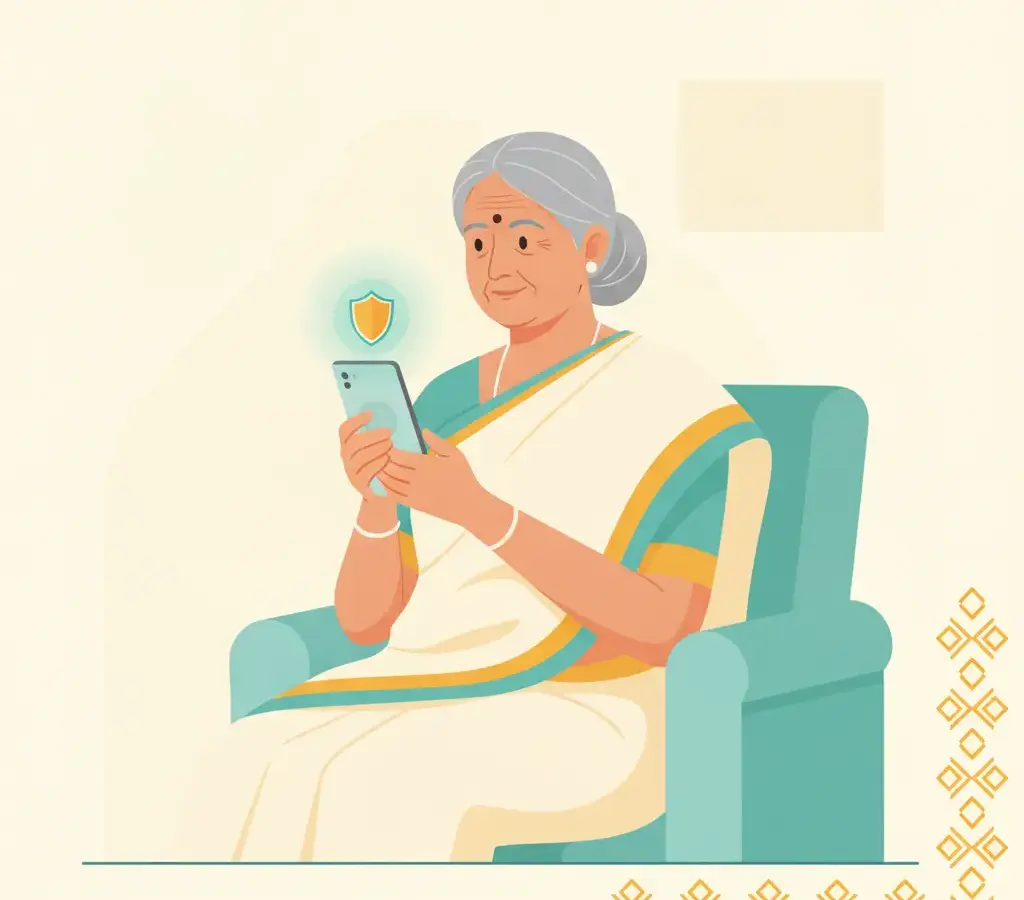
Hang up if anyone calls asking for your OTP, Aadhaar number, ATM PIN, or UPI details — no real bank or government official will ever ask for these by phone. Call the National Cyber Crime Helpline 1930 immediately if you suspect fraud.
Key Takeaways
- No real bank, police officer, or government body will ever ask for your OTP or PIN on the phone — hang up at once.
- The National Cyber Crime Helpline number is 1930. Save it in your phone right now.
- When in doubt, disconnect the call and call your bank's official number printed on the back of your debit or credit card.
- Tell a family member or trusted neighbour immediately if you receive a suspicious call — you may protect someone else too.
My name is Ramesh Iyengar, and I run smartphone-literacy sessions for seniors here in Mysuru. In almost every session, at least one participant tells me about a frightening phone call they received — a stranger claiming to be a bank officer, a CBI officer, or even a relative in hospital. These calls are designed to confuse and scare you so that you give away your money or private information before you have time to think.
You are not alone, and you are not foolish for being targeted. These criminals are professionals. But once you learn their tricks, you can recognise them and stay safe.
The Most Common Types of Scam Calls
The Fake Bank Officer
A caller says your bank account has been blocked, or that there is suspicious activity on your card. They sound very official and urgent. They ask you to share your OTP, account number, ATM PIN, or UPI ID to “verify” your account. They may even know your name and partial account details, which can make them seem genuine.
Your real bank will never call and ask for your OTP, full card number, or PIN. These are secret codes that only you should ever know. Not your bank, not your family, not the police — nobody else needs them.
The Government Official or “CBI Officer”
The caller claims you are involved in a crime — perhaps your Aadhaar number was used for illegal activity, or a parcel in your name was caught at customs. They threaten arrest. They tell you not to tell anyone and to transfer money immediately to “clear your name.” This is called “digital arrest” and it is entirely fake. No real government agency conducts arrests or investigations by video call or phone.
The KYC Update Scam
You receive a call saying your mobile SIM or bank KYC is expiring and will be blocked within hours. The caller asks you to share a link or OTP to “update” your records. This is a trick to take over your phone number or bank account.
The Distressed Relative
Someone calls saying your son, daughter, or grandchild has been in an accident or is in police custody. They beg you to send money immediately and tell you not to call the relative first. Always hang up and call your family member directly before doing anything.
How to Recognise a Scam Call: Six Clear Warning Signs
They create extreme urgency
Scammers push you to act “right now” — within the next ten minutes, before the account is blocked, before you are arrested. Real organisations give you time. If someone is rushing you, that itself is a warning sign. Take a breath and slow down.
They ask for OTP, PIN, or password
This is the clearest sign of a scam. Legitimate banks, telecom companies, and government bodies never ask for your OTP or PIN over the phone. An OTP is a One-Time Password that appears on your phone — it is meant for you alone, to authorise a transaction that you yourself have requested.
They tell you to keep the call secret
A real officer will never tell you to hide a conversation from your family. If a caller says “do not tell your children about this,” end the call immediately. Fraudsters isolate their victims to prevent others from warning them.
They ask you to install an app or click a link
They may ask you to install an app like “AnyDesk” or “TeamViewer” — these are remote-access tools that hand over control of your phone to the scammer. Never install any app at a stranger’s request.
The number looks strange or international
Indian helpline numbers and bank numbers are standard. Be careful if the call comes from a number starting with +92 (Pakistan), +1 (USA/Canada), or any unfamiliar country code. However, scammers can also fake Indian numbers, so a local-looking number is not a guarantee of safety.
They offer you money or prizes
You have won a lottery you never entered. Your KBC prize money is ready. A government scheme will give you Rs 50,000. These are all baits. Hang up.
What to Do When You Receive a Suspicious Call
Step one: Stay calm. Do not let fear make you act quickly. A genuine problem will still be there after you hang up and verify.
Step two: Hang up. Do not stay on the line trying to argue or explain. Simply end the call.
Step three: Do not call back the same number. If you need to verify, call your bank’s official customer care number, which is printed on the back of your debit card or on your bank’s official website.
Step four: Tell a family member or trusted neighbour immediately. They can help you decide what to do next.
Step five: If you have already shared any information or transferred money, call the National Cyber Crime Helpline at 1930 right away. You can also file a complaint at cybercrime.gov.in. Act fast — the faster you report, the better the chance of recovering your money.
Save the number 1930 in your phone contacts right now, under a name like “Cyber Crime Help.” If you or anyone you know is ever cheated, this is the first number to call.
A Word for Family Members
If you are reading this for an elderly parent or grandparent, please sit with them and practise these scenarios out loud. Ask: “What would you do if someone called and asked for your OTP?” Practise builds confidence. Also, make sure your phone number is saved in their phone under “Son Arjun” or “Daughter Priya” — not just a number — so they can call you quickly if they are worried.
The goal is not to make our elders afraid of the phone. The goal is to help them feel confident and in control. Knowing what to watch for is a strength, not a reason for fear.
Sources

Ramesh Iyengar
Ramesh Iyengar is the Elder Safety Specialist at Cyber Kannadigas. A retired educator from Mysuru who later trained as an adult-learning facilitator, he has run community smartphone-literacy sessions for senior citizens for several years. Ramesh writes specifically for older readers and the… Read full profile →
Frequently Asked Questions
Stay scam-safe: alerts in your inbox
Get new scam alerts, UPI-safety tips, and digital-literacy guides weekly. Free.