The UPI ‘Wrong Transfer’ Scam: How It Works
Scammers are exploiting the trust built around UPI's instant-transfer system by staging a fake 'wrong transfer' and pressuring victims into sending money back. Understanding the exact playbook is the first step to not falling for it.

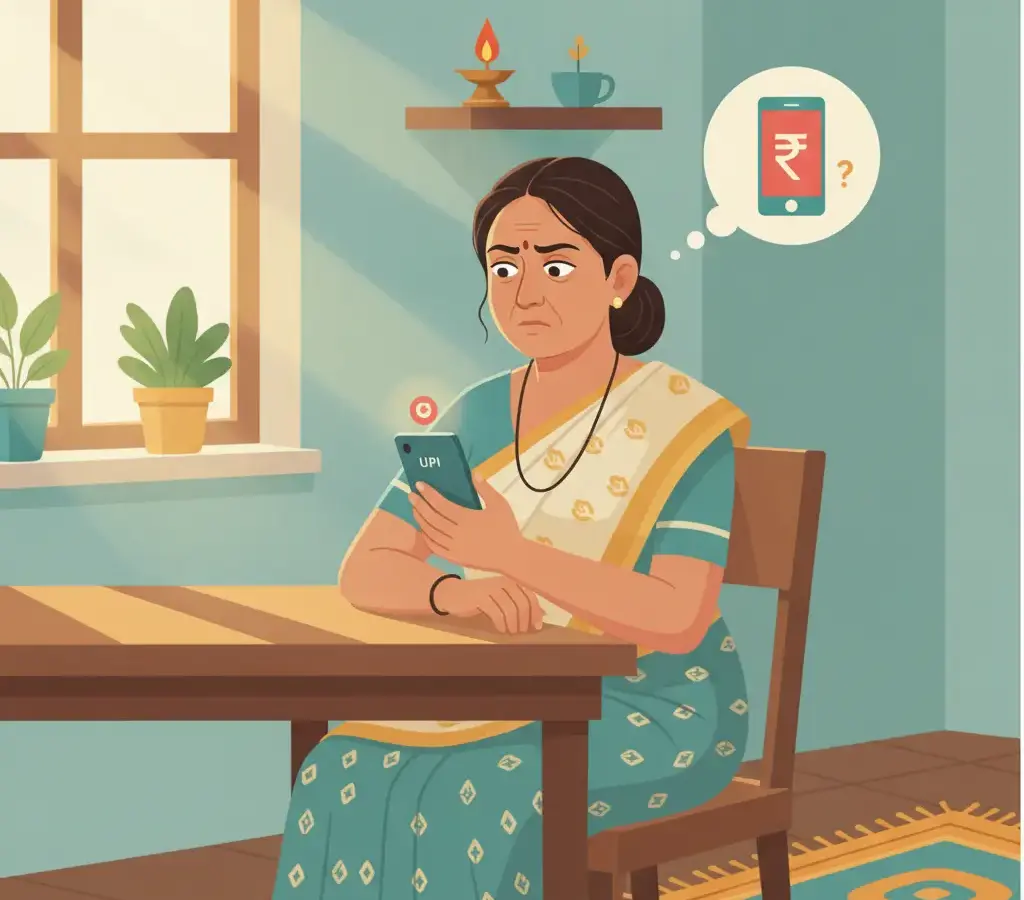
A fraudster sends you a small UPI credit, then calls claiming it was a mistake and asks you to 'return' the money — often to a different UPI ID. Your balance genuinely goes up, but the original transfer is fraudulent or will be reversed. Never send money back; tell the caller to raise a dispute through their own bank.
Key Takeaways
- A genuine wrong transfer can always be reversed by the sender's bank — you are never obligated to manually 'return' money.
- Scammers often follow up with a second, larger payment request once they have your trust.
- If you receive an unexpected UPI credit, check it in your passbook and do nothing until it is confirmed legitimate.
- Report the number and transaction on cybercrime.gov.in and call 1930 immediately if you suspect fraud.
The Setup: A Surprise Credit You Did Not Ask For
You receive a UPI notification: Rs 2,000 has been credited to your account. Moments later, a caller introduces themselves as a businessman from another city. They sound flustered and apologetic. They explain they were trying to pay a supplier and accidentally typed your UPI ID. They ask you to please send the Rs 2,000 back right away.
So far this sounds like an honest mistake that deserves a helpful response. That reaction — the impulse to do the right thing — is exactly what the fraudster is counting on.
How the Scam Actually Works
The money in your account is not an innocent mistake. There are two common ways it arrives:
- Stolen-account transfer: The Rs 2,000 was sent from a bank account belonging to another victim, compromised earlier through phishing or SIM-swap fraud. You are an unwitting intermediary.
- Reversible-credit trick: In some variants the credit appears genuine but will be reversed by the payment system after you have already sent your own real money.
When you ‘return’ the money, you typically send it to a mule account or a different UPI ID entirely — not the original source. The scammer collects your real money, then sometimes claims you sent too little and asks for more.
If a caller asks you to send money to a UPI ID that is different from the one that sent you the credit, stop immediately. This is the clearest sign of fraud. Hang up and report to 1930.
Why You Are Not Required to Return Money This Way
Under standard NPCI UPI guidelines, a payer who sends money to the wrong beneficiary files a dispute through their own bank or app — the payer’s bank then contacts your bank formally. You are never required to manually transfer money back to a stranger who calls you. A real wrong-transfer situation requires no action from you at all.
Warning Signs
- An unexpected credit is immediately followed by a phone call.
- The caller is in a hurry and creates urgency: ‘My supplier is waiting,’ ‘I will lose the deal.’
- They ask you to send money to a different UPI ID than the one that credited you.
- They ask you to scan a QR code to ‘confirm the return’ — scanning a payment QR sends money out.
- They ask you to approve a ‘collect’ request, which again debits your account.
- After a small return, they call again asking for a larger amount.
Do not send anything. Tell the caller to contact their own bank or app support and raise a dispute. Note the incoming UPI reference number, keep a screenshot, then report the caller’s number at cybercrime.gov.in or call 1930. Inform your own bank’s customer care too.
What to Do if You Are Targeted
- Do not transfer any money — no matter how convincing the story.
- Do not share your UPI PIN or OTP, and do not scan any QR code from the caller.
- Screenshot everything: the credit notification, the caller’s number, any messages.
- Call your bank to flag the incoming transaction.
- File at cybercrime.gov.in or call 1930. Karnataka residents can also contact the Karnataka State Police CEN Cell.
- If you already sent money, report to 1930 within the hour — banks have a better chance of freezing mule accounts quickly.
A Note on QR Codes and ‘Collect’ Requests
In UPI, scanning a payment QR always results in money leaving your account, and approving a ‘collect’ or ‘pay’ request requires your PIN to authorise a payment from you. There is no UPI mechanism by which scanning a code or approving a request causes money to arrive. If someone tells you otherwise, they are lying.
Targeted by a scam — or already lost money?
Act immediately: (1) call your bank and freeze the account · (2) call the national Cyber Crime Helpline 1930 · (3) file a complaint at cybercrime.gov.in · (4) visit your nearest police station. See our scam-awareness guide for step-by-step help.
Sources
Deepa Shenoy
Deepa Shenoy is the Scam Awareness Editor at Cyber Kannadigas. A consumer-affairs journalist based in Mangaluru, she has reported on financial fraud and cybercrime across coastal Karnataka for more than nine years, and has interviewed dozens of scam victims and cybercrime investigators.… Read full profile →
Frequently Asked Questions
Stay scam-safe: alerts in your inbox
Get new scam alerts, UPI-safety tips, and digital-literacy guides weekly. Free.