The Fake Customer Care Number Scam: How to Avoid It
When you search for a bank or delivery helpline online, the number at the top is not always real. Here is how the fake customer care number scam works and how to protect yourself.

A fake customer care number scam happens when a fraudster plants a phone number online where you expect a real helpline, so you call them instead of the company. They then pose as a support agent, ask for your card details, OTP or to install a screen-sharing app, and steal your money. Always get helpline numbers from the official app, the back of your card or the printed bill, never from a random search result, and never share an OTP or install an app a caller asks for.
Key Takeaways
- The scam works by placing a fake number where you expect a genuine helpline, so you call the fraudster yourself.
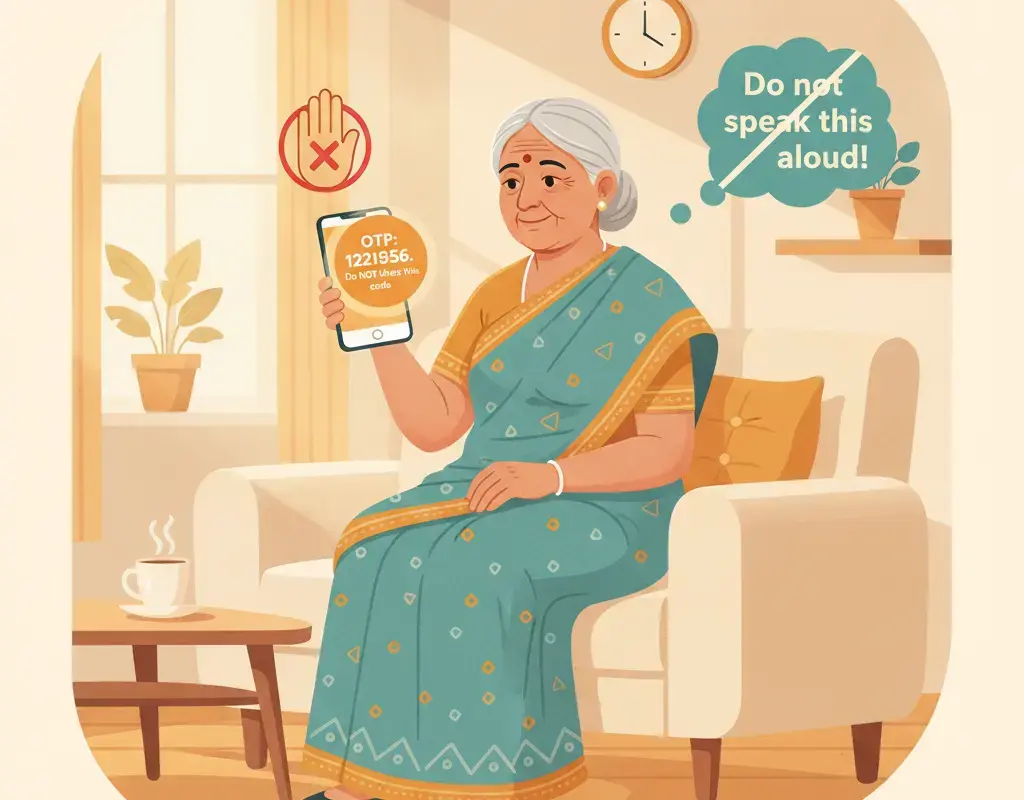
- No real bank, wallet or delivery company ever asks for your full card number, CVV, PIN or OTP over a call.
- Being asked to install AnyDesk, TeamViewer or any screen-sharing app during a support call is a certain sign of fraud.
- Find helpline numbers only inside the official app, on the back of your card, or on your printed statement or bill.
- If you have already paid or shared an OTP, call 1930 and your bank immediately, ideally within the first hour.
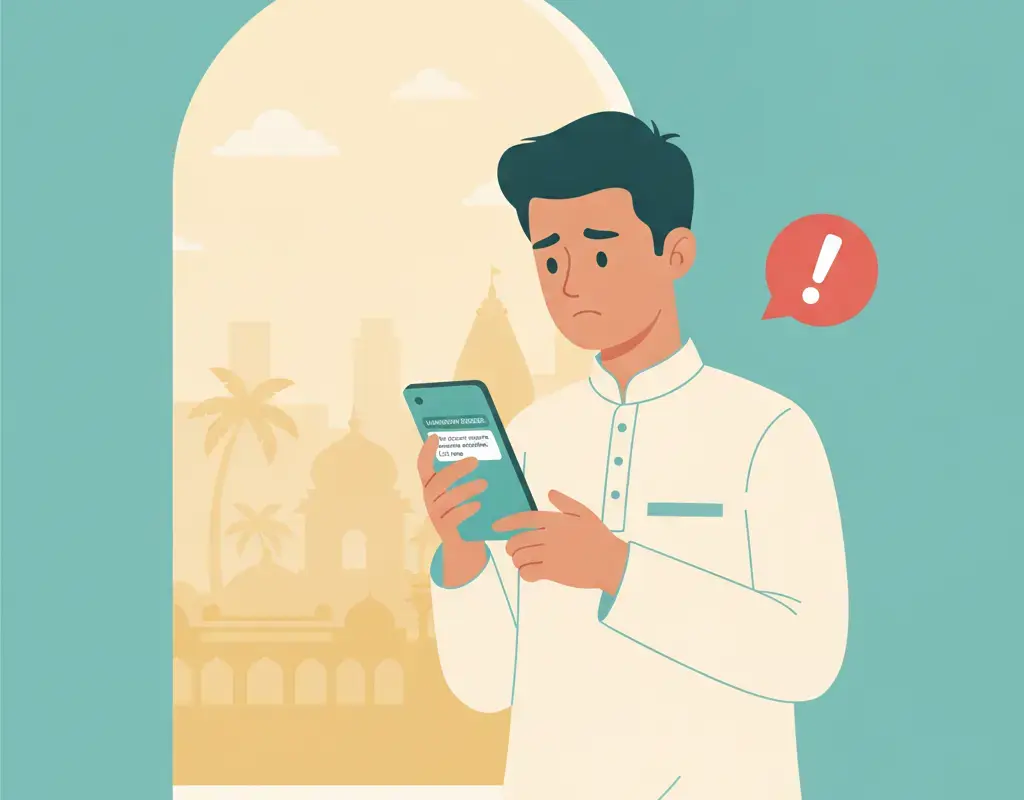
A fake customer care number scam is one of the simplest and most effective tricks used against people in Karnataka and across India. Instead of chasing you, the fraudster waits for you to come to them. They plant a phone number where you would naturally look for help, such as a search result, an ad, a social media comment or a look-alike website. When something goes wrong with your bank, wallet, food order or online purchase, you search for the helpline, dial the number you see, and end up talking to a criminal who sounds exactly like a support agent.
The reason this works is that you make the call. Your guard is down because you asked for help. You are already a little worried about a failed payment or a stuck refund, and the person who answers seems calm and professional. That trust is the whole trap. Understanding how the scam is built makes it much easier to spot, so let us walk through it slowly.
What is a fake customer care number scam?
It is a scam where a fraudster poses as the customer support team of a company you already deal with, after tricking you into dialling their number instead of the real one. They do not need your bank to be hacked. They only need you to believe you are speaking to your bank. Once you believe that, everything they ask for feels reasonable, because that is what a real agent would need, right? That instinct is exactly what they exploit.
Common targets are bank and credit-card helplines, UPI and wallet apps like PhonePe, Google Pay and Paytm, food and grocery delivery services, e-commerce refunds, and even electricity or gas connection support. The disguise changes, but the goal is always the same: get your card details, your OTP, or control of your phone.
How does the fake customer care scam actually work?
The scam usually runs in a predictable sequence. Knowing the steps helps you feel the moment something turns wrong.
- You go looking for help. A payment fails, a refund is late, or an order is stuck. You search online for the company’s customer care number.
- You find a planted number. A fake number appears near the top through paid ads, a fake website, or a comment posted under the company’s name. Sometimes it is one digit off the real one.
- A convincing agent answers. There may even be a recorded menu (“Press 1 for account services”) to sound official. A human then greets you, sometimes using your name, and asks how they can help.
- They build trust and urgency. They may mention a recent transaction to seem genuine, then say your account is blocked, your KYC is pending, or a refund needs “verification” right now.
- They ask for the wrong thing. They request your card number, CVV, expiry, PIN or the OTP that just arrived. Or they ask you to install an app “so we can process the refund faster”.
- The money leaves. With your OTP or screen access, they authorise transfers, add themselves as a payee, or drain your wallet, often while keeping you talking so you do not check your messages.
Notice that the fraud only succeeds at steps five and six. Everything before that is theatre. If you hold the line on your OTP and refuse to install anything, the scam collapses.
What are the red flags of a fake customer care call?
You do not need to be a technology expert to catch this. A handful of clear warning signs give it away. If you see even one of these, stop and hang up.
| Red flag | Why it is a warning sign |
|---|---|
| You are asked to share an OTP, PIN or CVV | No real support agent ever needs these. An OTP approves a transaction, so reading it out hands over your money. |
| You are told to install AnyDesk, TeamViewer or any screen-sharing app | This gives the caller live control of your phone. Genuine helplines never require it. |
| Strong urgency (“your account will be blocked in 10 minutes”) | Pressure is designed to stop you thinking clearly and checking with anyone. |
| You are asked to pay a small “verification” or “refund unlock” fee | A refund never requires you to pay first. This is a hook to capture your card or UPI PIN. |
| The number came from a search ad, comment or unfamiliar website | These placements are easy for fraudsters to buy or post. The source is not trustworthy. |
| They ask you to move to WhatsApp or read a message they send | Shifting the call helps them send links, share fake documents, or start a screen-share. |
A useful rule: legitimate support helps you without ever needing your secret codes or your phone screen. The moment a caller crosses that line, the call is fake, no matter how polite or professional they sound.
How do I find the real customer care number?
The safest habit is to stop trusting search results for helpline numbers. Get the number from a place the company itself controls.
- Open the official app. Banking, wallet and delivery apps list Help or Support inside the app. Numbers and chat options there are genuine.
- Look at your card. The back of your debit or credit card prints the real bank helpline.
- Check your bill or statement. Electricity, gas, telecom and bank statements carry the official contact details.
- Use the order confirmation. For a delivery or purchase, the confirmation email or in-app order page has the correct support route.
- Type the website address yourself. If you must use a website, type the company’s known address directly rather than clicking a search ad, and confirm the spelling carefully.
This single change, sourcing the number from the app or the card instead of a search, removes the most common way people fall into this scam. It is the same discipline that protects you from broader phishing attacks and from the AnyDesk remote-access scam, where the goal is also to get you to install a screen-sharing app.
What should I do if I have already been scammed?
If you shared an OTP or card details, or you paid, move quickly and calmly. The first hour matters most, because a fast report gives the bank the best chance to hold the money before it is withdrawn. This is often called the golden hour.
- Call your bank right away to block the card, stop the account and reverse or halt any pending transaction. Use the number on the back of your card.
- Call 1930, the national cyber crime helpline, to report the financial fraud so it can be flagged in the banking system.
- File a complaint at cybercrime.gov.in, the National Cyber Crime Reporting Portal, and note your acknowledgement number.
- Uninstall any app the caller made you download, especially screen-sharing apps, and turn off your internet briefly if you suspect live access.
- Change your passwords for net banking, UPI and email from a safe, trusted device, and reset your UPI PIN.
- Keep the evidence. Save the number you called, screenshots, and transaction messages. They help the investigation.
Do not be embarrassed to report. These operations are professional and rehearsed, and they succeed against careful people every day. Reporting quickly is the responsible thing to do, and it also helps authorities trace the network. You can read more on the full process in our guide to scam awareness and reporting cyber fraud.
What are the most common mistakes people make?
Almost everyone who loses money to this scam makes one or two of the same avoidable slips. Knowing them in advance builds a useful instinct.
- Trusting the top search result. People assume the first number they see is official. Position in a search is bought and gamed, not verified.
- Calling because a payment or refund is stuck. The anxiety of a blocked transaction makes people act faster and question less, which is exactly the state the scammer needs.
- Believing an agent who “knows” a recent transaction. A caller mentioning your last purchase feels like proof, but such details can be guessed, phished or bought, and prove nothing.
- Reading out an OTP “just to verify identity”. This phrasing is a script. An OTP never verifies you to a support agent; it authorises a transaction.
- Staying on the call while money leaves. Scammers keep you talking so you do not check your SMS alerts. If a call turns to payments or apps, hang up and check your messages.
The thread running through all of these is haste. Slow the moment down and the scam usually cannot survive the delay. A genuine company is happy for you to hang up, verify the number, and call back.
How can families protect elderly or less tech-savvy members?
Older parents and relatives are often targeted because they may be newer to apps and more trusting of an authoritative voice. A few simple, respectful habits help a great deal. Agree as a family that no one shares an OTP with anyone on a call, ever. Save the real bank and wallet helpline numbers in their phone contacts in advance, so they never have to search in a panic. And set a calm rule that any urgent money call gets paused so they can ring a trusted family member first. There is more practical guidance in our note on keeping elderly parents safe from online scams.
The bottom line
The fake customer care number scam beats people not through clever hacking but through a small, understandable mistake: trusting a helpline number found in a search. Flip that one habit, and the scam has almost nothing to work with. Get numbers from the app, the card or the bill. Never share an OTP, CVV or PIN. Never install an app a caller asks for. And if something feels rushed and frightening, that feeling itself is the warning. Hang up, breathe, and call the real number you already have.
Targeted by a scam — or already lost money?
Act immediately: (1) call your bank and freeze the account · (2) call the national Cyber Crime Helpline 1930 · (3) file a complaint at cybercrime.gov.in · (4) visit your nearest police station. See our scam-awareness guide for step-by-step help.
Sources
Vikram Nayak
Vikram Nayak leads cybersecurity coverage at Cyber Kannadigas. He is a certified information-security professional (CompTIA Security+ and CEH) with eight years of experience in security operations and awareness training at IT-services firms in Bengaluru. Vikram translates dense security concepts — phishing kits,… Read full profile →
Frequently Asked Questions
Stay scam-safe: alerts in your inbox
Get new scam alerts, UPI-safety tips, and digital-literacy guides weekly. Free.